
News • Ideas • Events
EDITOR’S DESK
The Gales of November
As a third-grader, I earned some undeserved notoriety thanks to a popular song that hit the airwaves that year: Gordon Lightfoot’s “The Wreck of the Edmund Fitzgerald.” For the next 50 years, people would ask whether I was related to that Fitzgerald. I wasn’t. And trust me, my Uncle Edmond had it worse.
On Nov. 10, 1975, the SS Edmund Fitzgerald disappeared in a fierce storm on Lake Superior. All 29 crew members were lost. The 729-foot freighter had left Superior, Wis., carrying more than 26,000 tons of iron ore bound for steel mills near Detroit.
Most of us, however, know the Fitzgerald through Lightfoot’s song — a ballad that turned a maritime disaster into a story generations would remember. The record played endlessly in our home, and its lyrics haunted me as I tried to understand what had happened to the ship and its crew: “They might have split up or they might have capsized / They may have broke deep and took water.”
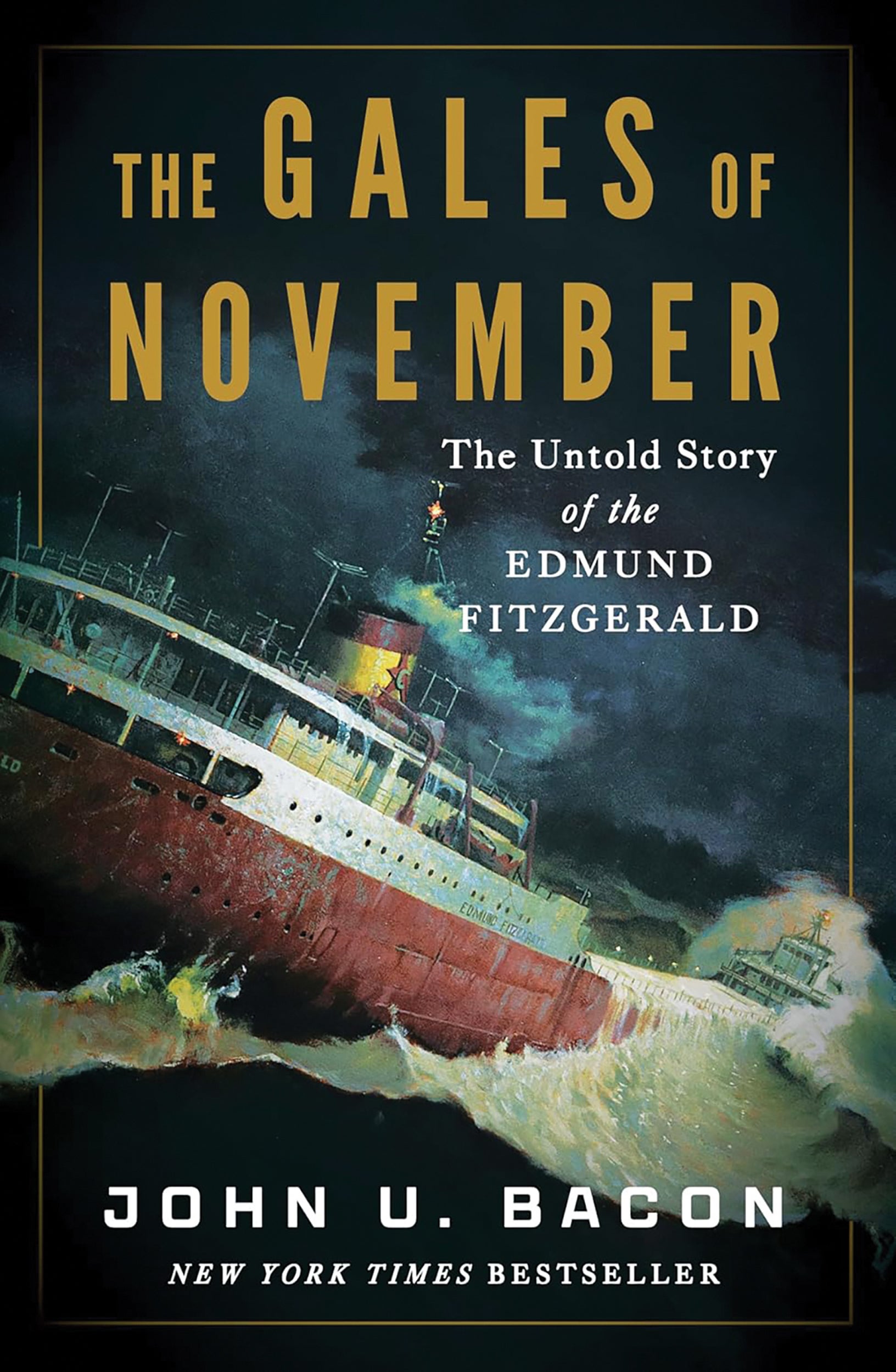
Fifty years after the tragedy, writer John U. Bacon borrowed a line from the song for the title of his excellent book, The Gales of November: The Untold Story of the Edmund Fitzgerald. Bacon places the ship within the broader story of Great Lakes shipping in postwar America. He details how the Fitzgerald was part of a vast network of mines, railroads, ports, ships and steel mills that helped power the nation’s industrial growth.
But Bacon also accomplishes what Lightfoot did so well in his ballad: He humanizes the story. Drawing on more than 100 interviews with relatives, friends and former crewmates, he examines not only the sinking of the ship, but he also delves into the lives of the people aboard and their families.
In doing so, Bacon reminds us that infrastructure is more than steel, machinery or miles traveled. Its true measure is found in the people who build it, operate it and depend upon it. It’s an idea that resonates deeply with the story of electric cooperatives — an industry built by people willing to go the extra mile, and who understand what storms can do. It’s something I try to keep in mind, especially when the gales of November come early.
PETER A. FITZGERALD
EXECUTIVE EDITOR
CLEANING UP
Game Commission to destroy most WWII bunkers in Lycoming, Union counties
Some of Pennsylvania’s World War II bunkers will soon be no more.
The Pennsylvania Game Commission (PGC) announced recently that it plans to destroy most of the historic bunkers in Lycoming and Union counties that were built to store TNT manufactured at a nearby highly classified facility.
While there were once 149 bunkers, the PGC’s long-range plan is to preserve only 16, which will be open to the public during its annual game land tours in September and October. The rest will be destroyed and the land restored to wildlife habitat.
The PGC, which owns the land west of Route 15 in southern Lycoming County and northern Union County, says the oval-shaped bunkers have attracted partiers and vandals, leading to a significant amount of trash and graffiti at the sites.
A few years ago, it was revealed that in 1943 and 1944, four of the bunkers were secretly used to store 50 tons of uranium metal turnings from the Manhattan Project, which developed the atomic bomb.
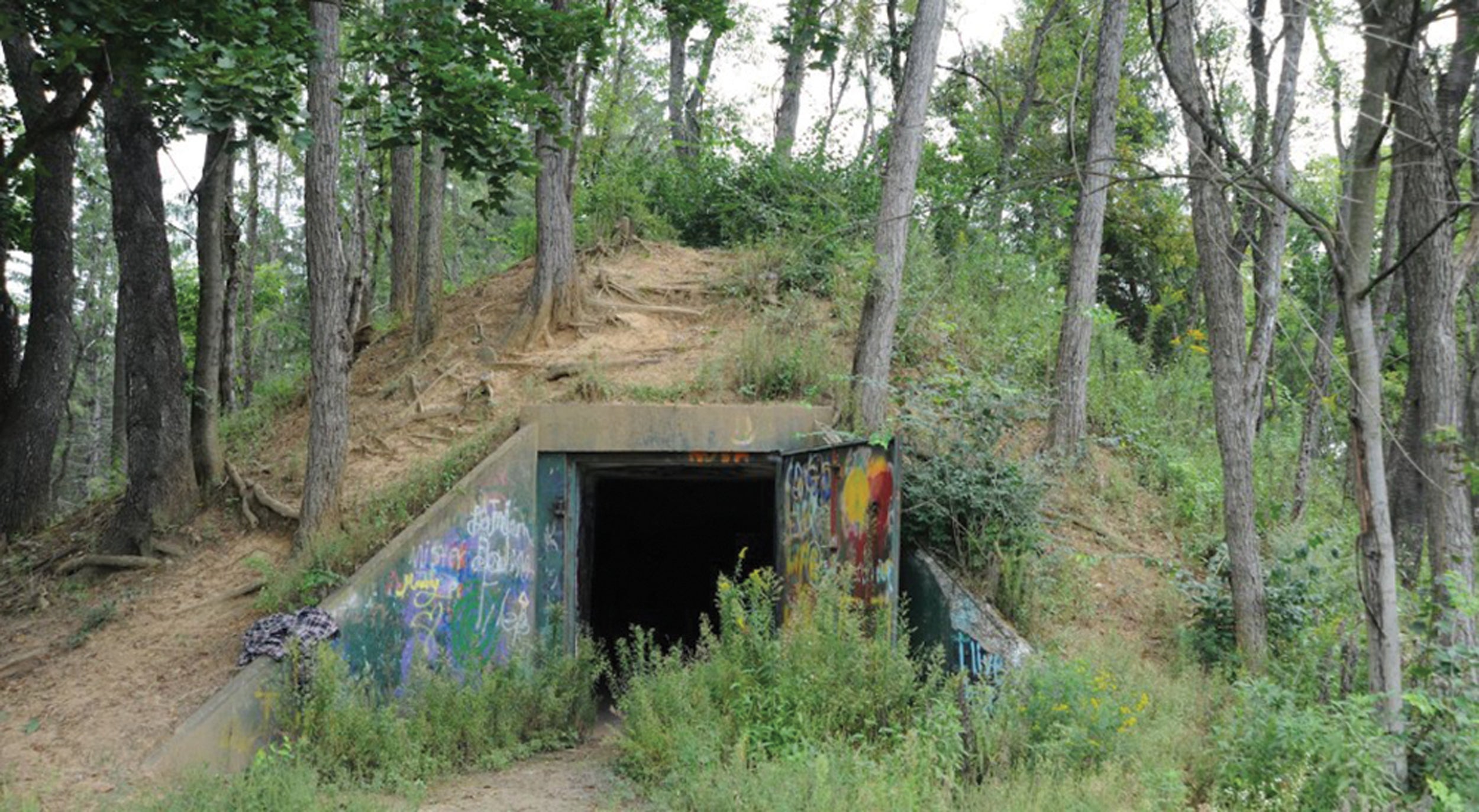
BYE, BYE BUNKERS: The Pennsylvania Game Commission (PGC) plans to eliminate more than 100 World War II bunkers in Lycoming and Union counties. The PGC says it will preserve 16, which will be open to the public at certain times during the year.
BIRDS OF A FEATHER
Piping plover marks milestone in Erie County
For a bird barely bigger than a sparrow, the piping plover has staged an impressive Pennsylvania comeback. After disappearing from the state for more than 60 years, the endangered shorebird has now nested at Erie County’s Presque Isle State Park for 10 consecutive years.
The comeback was hardly a “shore” thing. Presque Isle provides Pennsylvania’s only breeding habitat for the Great Lakes piping plover, whose sand-colored eggs can nearly vanish against the beach. As recreation increased and nesting areas became harder to protect, the birds abandoned the park in the
mid-1950s.
A federal recovery plan released in 2003 helped set the stage for their return. Three plovers were spotted at Presque Isle in 2005, and a partnership led by the Pennsylvania Game Commission later brought together federal and state agencies and conservation organizations to restore habitat, monitor nests, and safeguard chicks.
The population remains small and fragile, but the decade-long nesting streak offers an encouraging sign, officials say.
WELCOME TO THE COMMONWEALTH
Chobani to open operation in Lehigh Valley as part of largest Pa. ag investment ever
The largest single private investment in Pennsylvania agriculture is coming to the Lehigh Valley.
State officials announced in September that Greek yogurt-maker Chobani will establish its first dairy product manufacturing operation in Upper Macungie Township. The business is expected to create approximately 900 jobs over the next five years.
When operating at full capacity, the facility will source more than 3 billion pounds of milk a year, equivalent to about 30% of the milk produced in Pennsylvania today. Production at the 1.5 million-square-foot facility is expected to begin next year.
Officials said the Commonwealth will provide $50 million in loans and grants to support infrastructure and site improvements at the plant as well as broader regional economic development projects. The Commonwealth will also make $127 million in loans and grants available to eligible Pennsylvania dairy farmers to meet the new demand for milk products.


TIME LINES — November 2016
A decade ago, Penn Lines showcased the Homegrown by Heroes-PA Preferred Program, which encompassed 13 veteran-owned farms throughout the Commonwealth. The initiative took shape after veterans approached the state Department of Agriculture to create an initiative that would recognize service members involved in farming. The article highlighted Terrace Mountain Alpacas in Huntingdon County, still owned by Valley Rural Electric Cooperative member Bob Baker, a Vietnam veteran. “We got into [raising alpacas] because we knew, going into retirement, it would give us something to do and keep us active,” he said in the 2016 article.
Also in this issue