News • Ideas • Events
EDITOR’S DESK
My Parents' Energy Policy
Growing up, my parents enforced a strict energy policy in the home. It was not written down, and there were no regulatory filings and certainly no public comment periods. But the rules were clear: Turn off the lights when you leave a room, use renewable energy — otherwise known as the sun — to dry your clothes and ride your bike if you needed to get anywhere.
Perhaps influenced by the energy worries of the 1970s, those house rules taught us a lesson about saving resources — and money. It’s a lesson electric cooperatives have put to work for four decades: The cheapest energy is the energy you never have to produce.
That commonsense principle is at the heart of one of the most successful programs in Pennsylvania cooperative history: the Coordinated Load Management System (CLMS), which is celebrating its 40th anniversary this year. Created by electric cooperatives in this state working with their wholesale power provider, Allegheny Electric Cooperative, CLMS helps reduce electricity use during periods of peak demand, when power is most expensive.
Because cooperatives operate to provide the most affordable power possible, they asked: Instead of buying this costly electricity or building additional generating resources to meet these periods when demand is at its highest, why not reduce or shift demand during those peaks?
For the past 40 years, cooperative members have helped answer that question. By voluntarily allowing water heaters, heating systems and other equipment to be cycled off during periods of high demand, participating members help lower the amount of electricity that must be purchased when prices are at their highest.
CLMS does not produce electricity. Instead, it produces value by helping cooperatives avoid costs before they occur. Individually, each act of participation may seem small. Collectively, those choices have helped cooperative members avoid nearly $185 million in purchased power costs since 1986.
As we observe National Cooperative Month this October, CLMS continues to prove that some of the best solutions are also the simplest. And that cooperation remains one of our most powerful energy resources. For cooperatives, it’s simply common sense — a policy my parents would fully endorse.
PETER A. FITZGERALD
EXECUTIVE EDITOR

PASSING THROUGH
Plan to create bypass on Pa. Turnpike at Breezewood receives commission’s blessing
Changes are coming to the Pennsylvania Turnpike in Bedford County.
The state Turnpike Commission recently decided it will move forward with changes to the Breezewood interchange. The plan includes modernizing Exit 161 with a bypass that will provide a direct connection between the turnpike and Interstate 70.
Currently, traffic moving between the turnpike and I-70 must detour onto a quarter-mile stretch of U.S. Route 30, lined with traffic signals and businesses. A direct connection would improve safety, ease congestion and keep through traffic moving.
In 2022, 2.65 million turnpike exits and 2.83 million turnpike entrances were recorded at Breezewood — 37% of them involved trucks. The bypass is expected to reduce backlogs and accidents on local roads. A feasibility study also found that the redesign may unlock new developable land and generate millions in long-term economic impact.
Construction timelines will be announced as the project develops. To learn more, visit paturnpike.com.
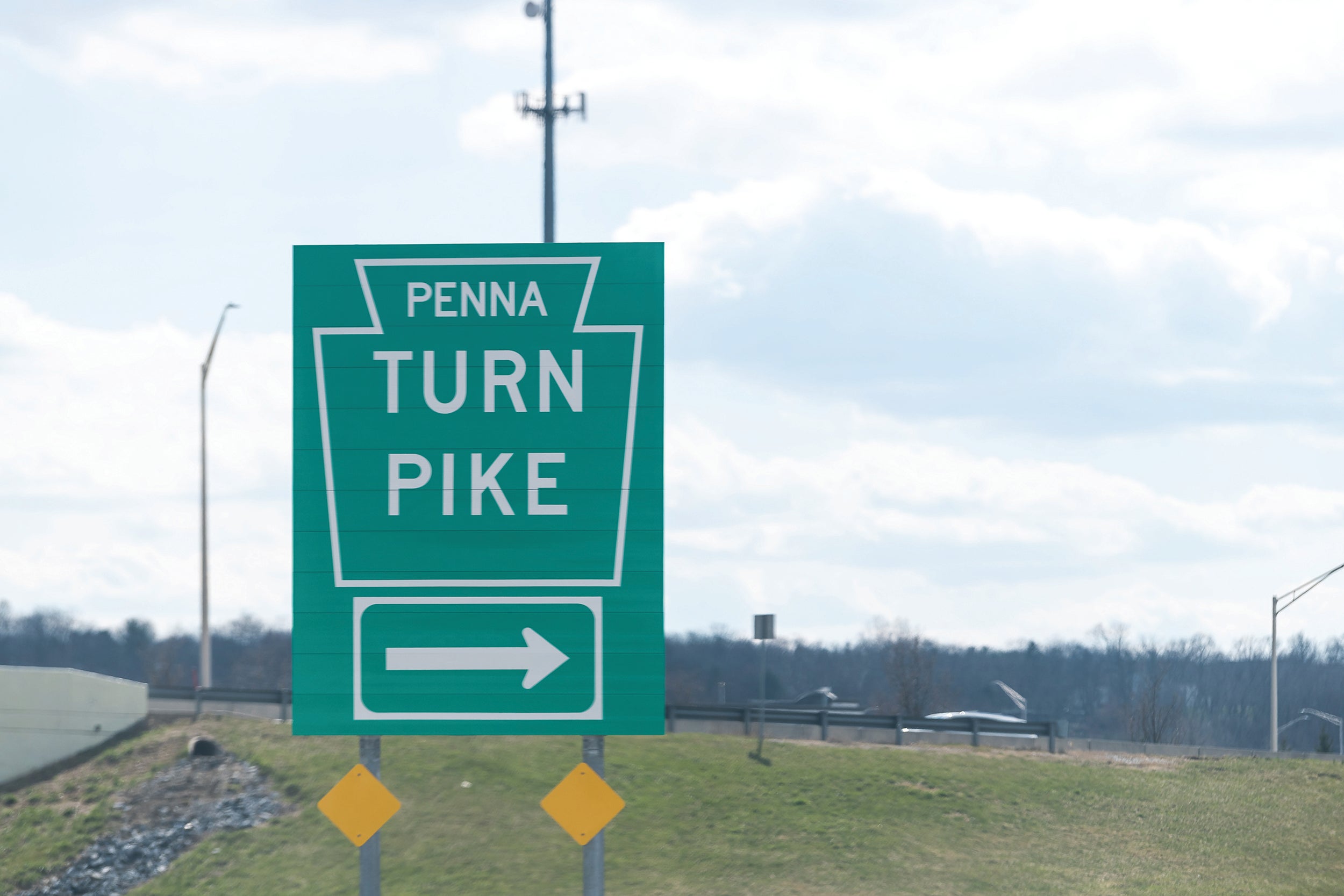
EASING TRAFFIC: The Pennsylvania Turnpike Commission recently decided it will move forward with a plan to construct a bypass at the Breezewood interchange in Bedford County. The new route will provide a direct connection between the turnpike and Interstate 70.
STAY SAFE
Measles outbreak in Pa. rises to hundreds of cases, four deaths
The measles outbreak in Pennsylvania continues to expand.
The state Department of Health (DOH) announced in September that 676 cases have been confirmed in 37 counties. As of mid-month, four measles-related deaths have also been reported.
Officials continue to work with healthcare providers, the public and organizations to provide information about the measles, mumps and rubella (MMR) vaccine. Since the outbreak began in April, state health officials have administered more than 3,900 MMR vaccinations at more than 100 pop-up health clinics in affected communities. In all, state health center staff have administered more than 5,700 MMR vaccine doses to Commonwealth residents in 2026.
The vaccine, 97% effective after two doses, is available by contacting your healthcare provider, your county or municipal health department, the state health center, or the federally funded Vaccines for Children Program.
People who believe they were exposed to measles and are experiencing symptoms should contact their healthcare provider or call the DOH’s toll-free hotline at 877-PA-HEALTH (877-724-3258).
AWARD WINNERS
Penn Lines earns writing awards, former editor honored
Penn Lines recently received two awards for writing at the 2026 Willies Awards, hosted by the National Electric Cooperatives Statewide Editors Association (SEA) in Pittsburgh.
The magazine won a first-place honor for “Peak Performance,” published in July 2025. The feature told the story of Allegheny Electric Cooperative, Inc.’s Coordinated Load Management System, a model cost-savings energy program in the state.
Penn Lines also received a second-place Award of Excellence for “More Than a Meal,” which appeared in the March 2026 issue. The feature highlighted cooperative efforts to overcome food insecurity in rural areas.
In addition to the writing awards, former Penn Lines Editor Perry Stambaugh was presented with the SEA Lifetime Achievement Award. Stambaugh, now an elected state representative, is also a former editor of RE Magazine, the flagship publication of the National Rural Electric Cooperative Association. He helped found American MainStreet Publications, which connects advertisers with millions of rural consumers through cooperative publications, including Penn Lines.
The Willies Awards — named for Willie Wiredhand, the rural electric cooperative mascot — is an annual competition that drew more than 400 entries this year from cooperative publications nationwide.
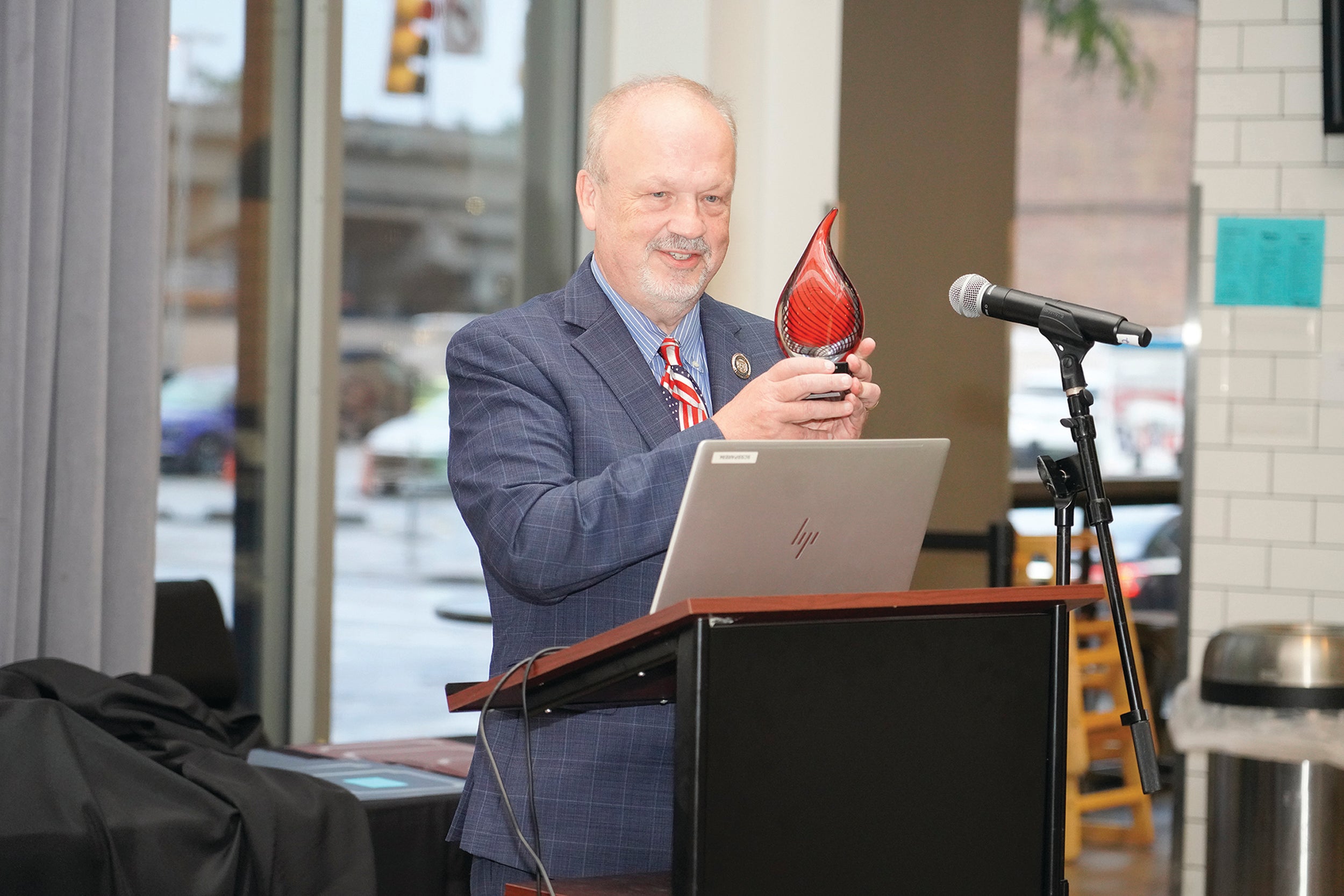
LIFETIME ACHIEVEMENTS: Former Penn Lines Editor Perry Stambaugh accepts the Lifetime Achievement Award from the National Electric Cooperatives Statewide Editors Association (SEA) this summer in Pittsburgh. Penn Lines also took home two SEA writing awards.
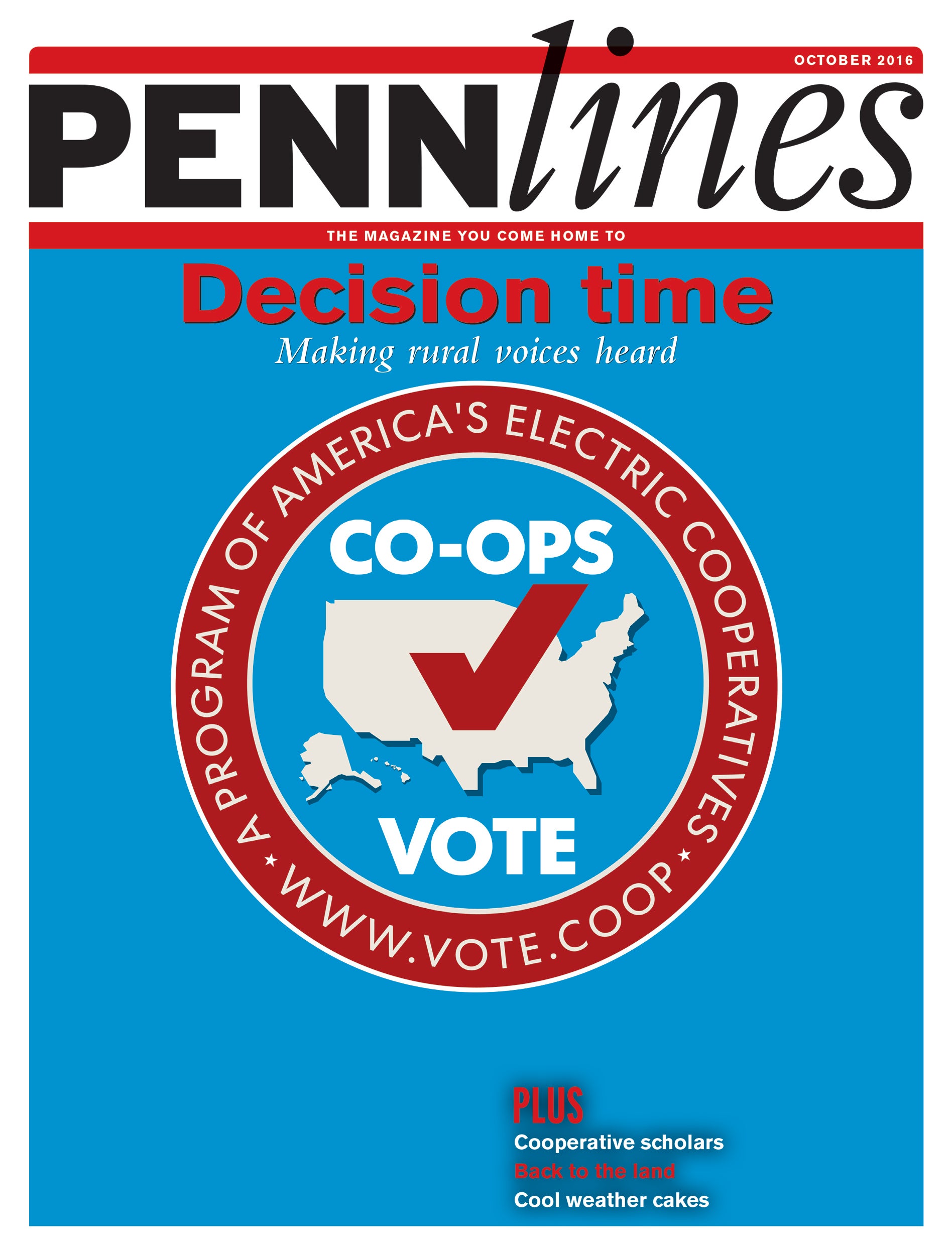
TIME LINES — October 2016
A decade ago, Penn Lines put Pennsylvania’s midterm elections in the spotlight, listing candidates running for seats in the state House and Senate. The issue also recognized the next generation of cooperative leaders, announcing the recipients of the Pennsylvania Rural Electric Association Scholarship in Memory of William F. Matson and the Jody Loudenslager Memorial Scholarship. And as Penn Lines marked its 50th year, readers were invited to join the celebration by participating in three essay contests. Selected entries appeared in the magazine throughout the year.
Also in this issue